
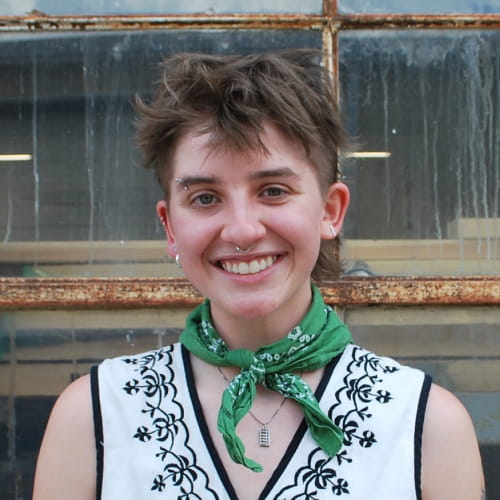
Rylee Brabham is a BFA student at Mississippi State University with a concentration in sculpture. They are expected to graduate in 2025. Brabham’s sculptures and installations utilize objects and materials that are gendered in overt or abstract ways (metalwork, embroidery, antique heirlooms) to explore family structures and domestic spaces. They have exhibited work in multiple student shows, including the 5th Annual CAAD (College of Architecture, Art and Design) + CALS (College of Agriculture and Life Sciences) Exhibition, where they received an honorable mention as well as a CALS Dean of Students Purchase Award. Most recently, Brabham received grant funding for a solo show through CAAD and successfully exhibited the proposed installation. Additionally, they presented work at the 2024 Mid-South Sculpture Alliance Conference as a recipient of the 2024 Diane Komminsk Scholarship.
Contributing writers were encouraged to pen texts using the style, voice, and format of their choice. The resulting suite of poetry, journalistic and critical prose, creative essays, and personal reflections offers diverse perspectives on the artists, their practices, and their lives.
A Note from the Curator
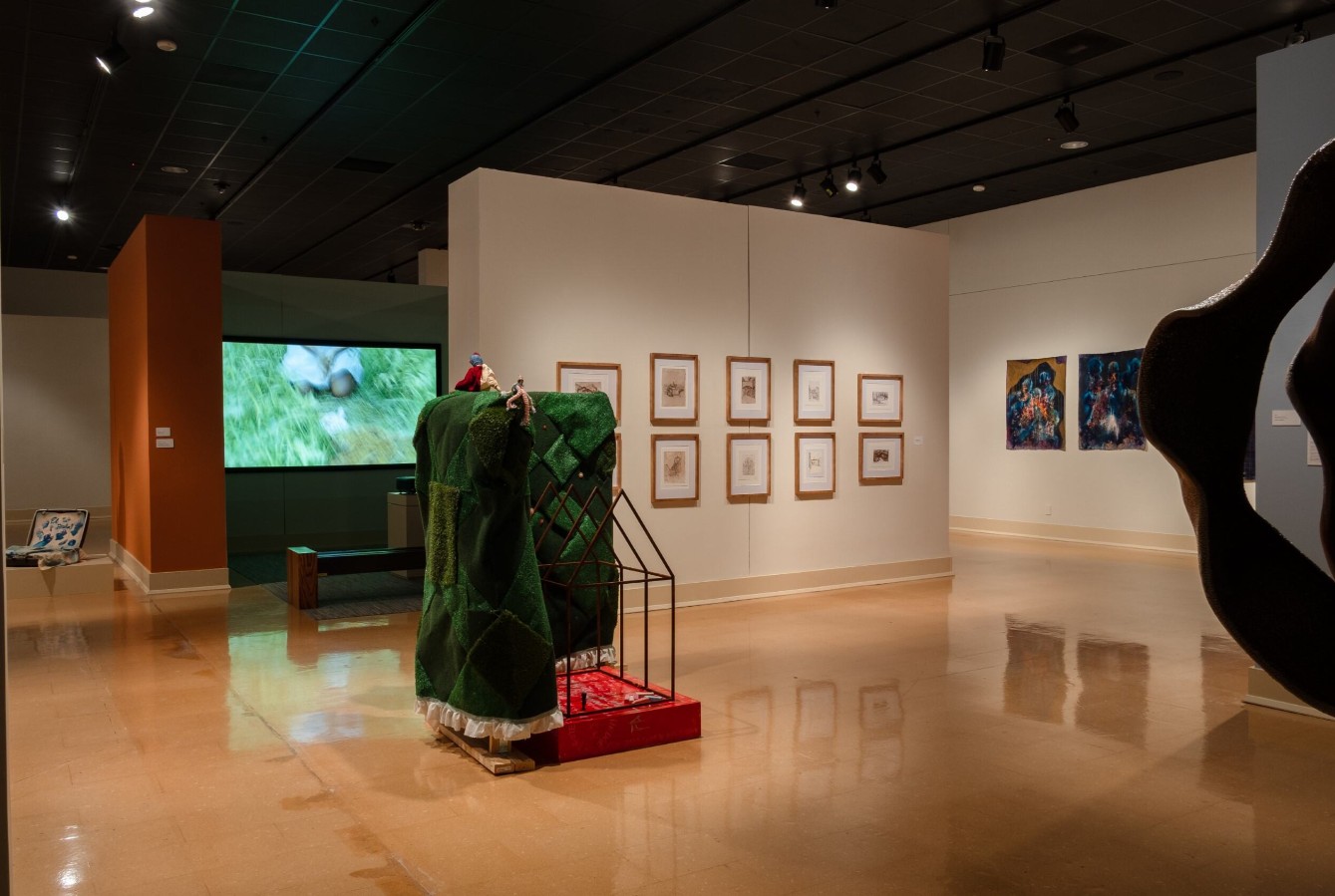
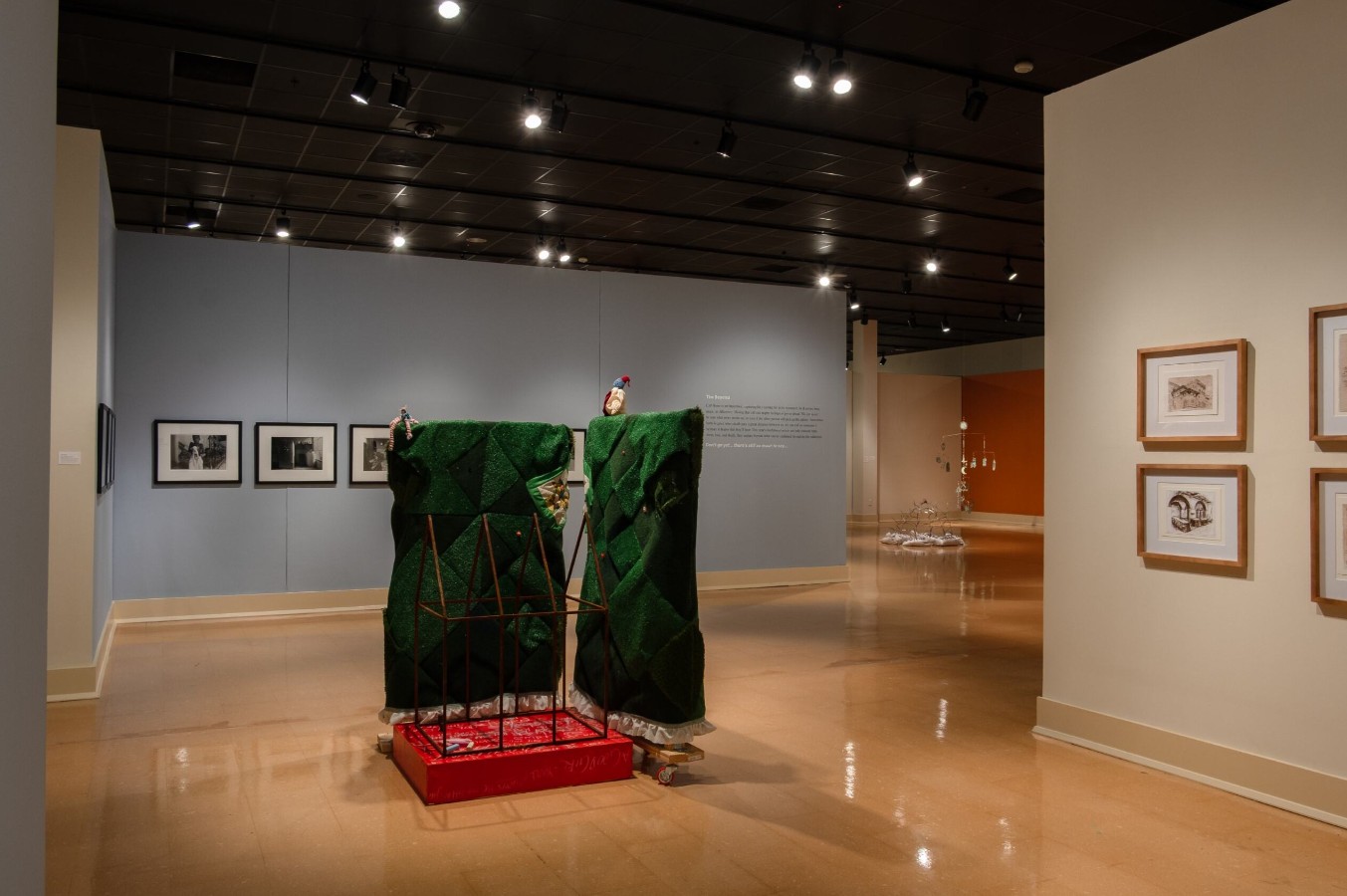
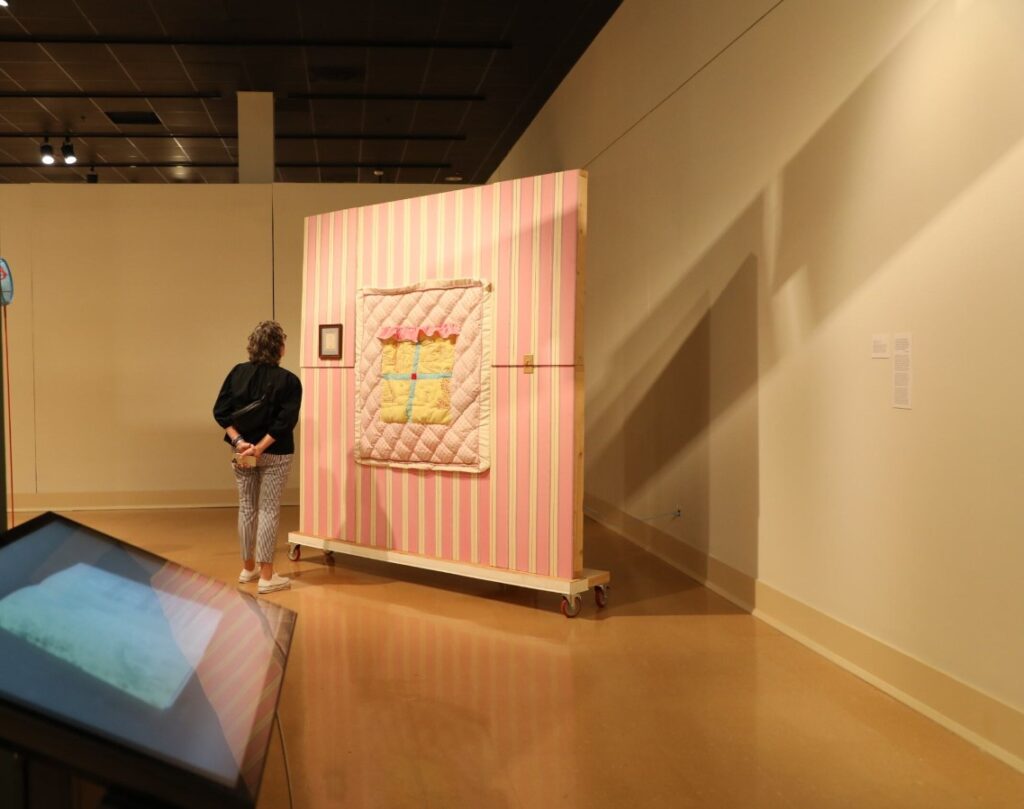
Rylee Brabham uses humor as an entryway to explore complex subjects such as gender, sexuality, desire, and social class. Throughout their multimedia practice, the artist uses unconventional sets and props, installations consisting of found and made objects, to comment on the ways we perform gender through everyday behaviors, which are often taught and enforced at home. Dalia Silverstein is an artist and writer from New York. In this short critical essay Silverstein unpacks the queer radicality of Brabham’s practice, focusing on how the artist challenges our perceptions of belonging for queer people.
Dalia Silverstein on Riley Brabham
Fundamentally, Rylee Brabham’s work rejects the pseudo-belonging offered to queer people, which often serves to alienate the individual from self, others, and the world. That is, Brabham’s art refuses both the demand for a queerness that is palatable, and profitable, and the conservative anxiety of anything that diverges from tradition. Both propositions refute even a superficial recognition of alternative ways of being, which Brabham evokes through displays of queerness, unbridled. As he formulates it, Brabham’s art calls on queerness as not just an identity but as an embodied practice of resistance and possibility—a state that social critic bell hooks describes as “at odds with everything around it,” one that “has to invent and create and find a place to speak and to thrive and to live.”
Brabham’s work is thus a testament to the complexity of belonging. His practice exhibits a bold perversion and mockery of normativity’s demand for a legible self, refusing to be at its beck and call, refusing to be rendered sensible within it, and refusing to legitimize its authority. He has no interest in conformity, but rather in breaking free: becoming, being, and belonging on one’s own terms. This self-affirmation through defiance, trans-ness—transgression, transformation, transcendence—is precisely what he flaunts. We see this in Brabham’s work, for example, through childhood mementos, heirlooms, and other components of the nuclear home whose associations have been stripped down, rusted, inverted, or reduced to collections of unsettled, decontextualized parts that are finally redeployed and suspended in all their artifice.
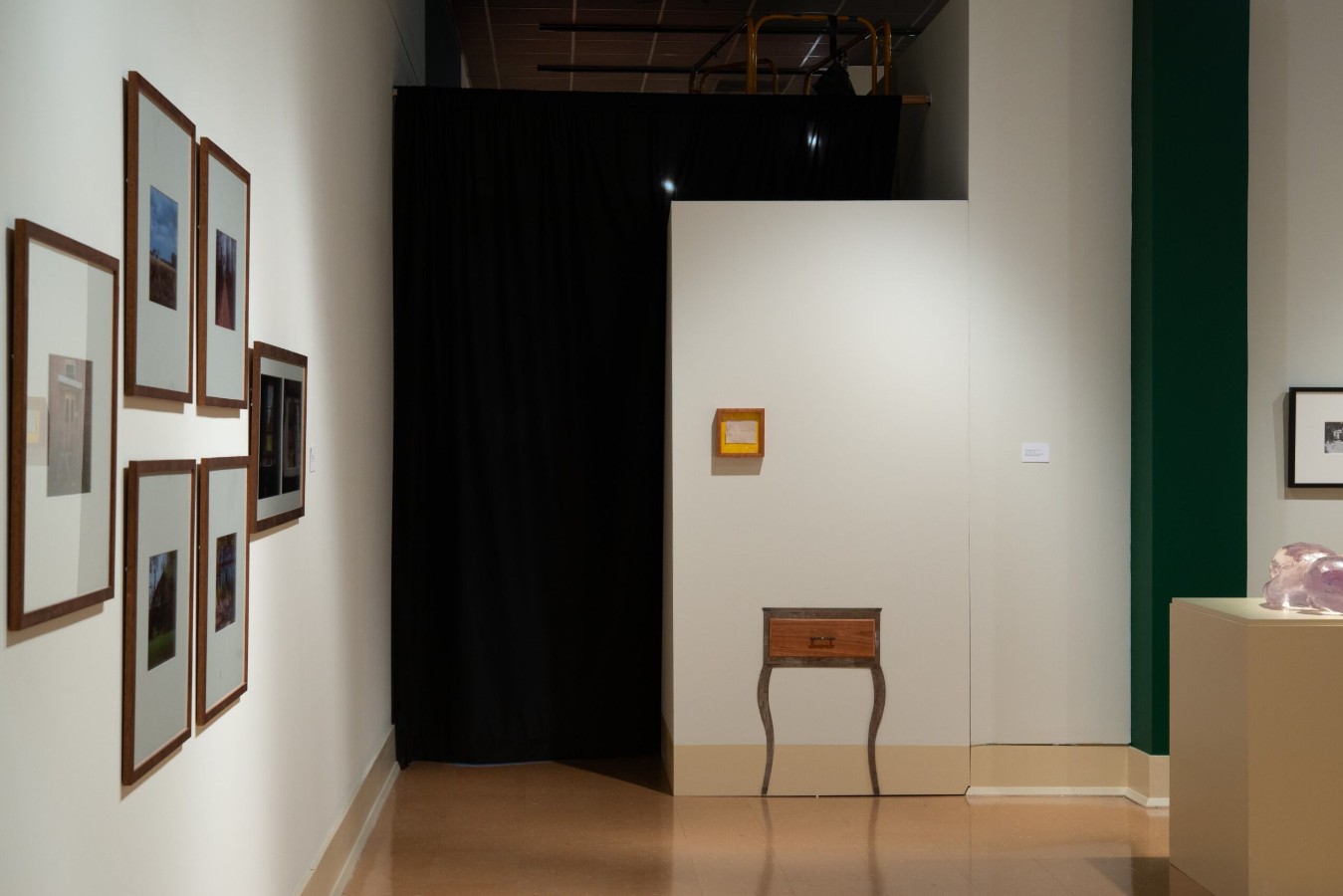
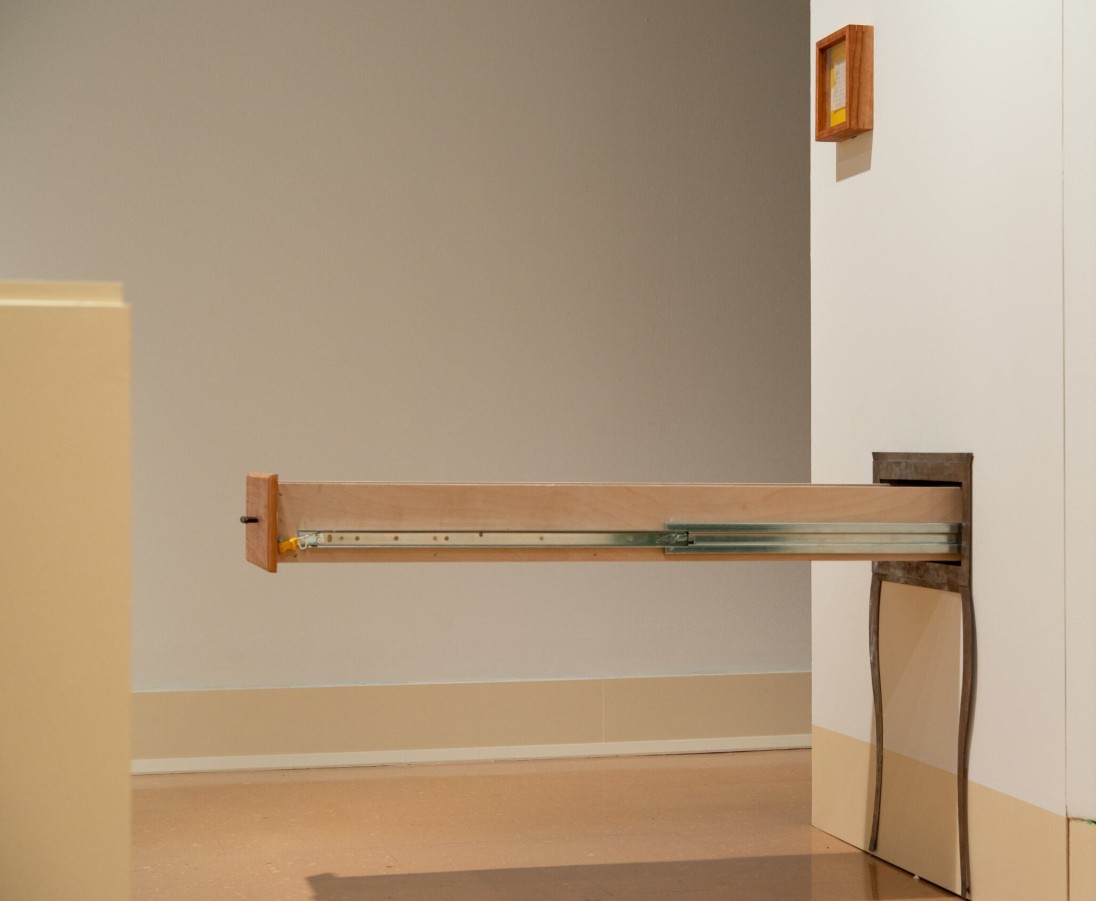
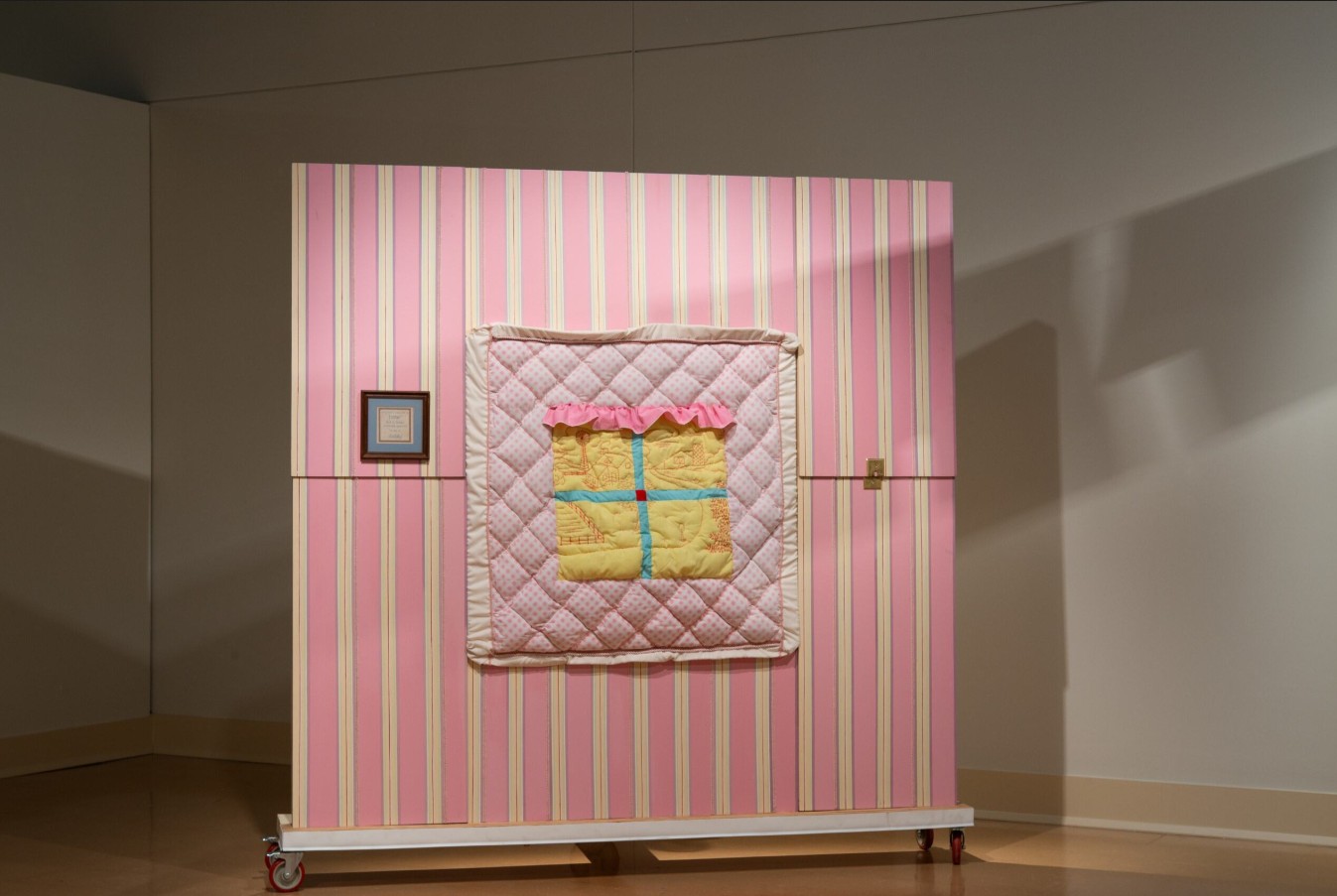
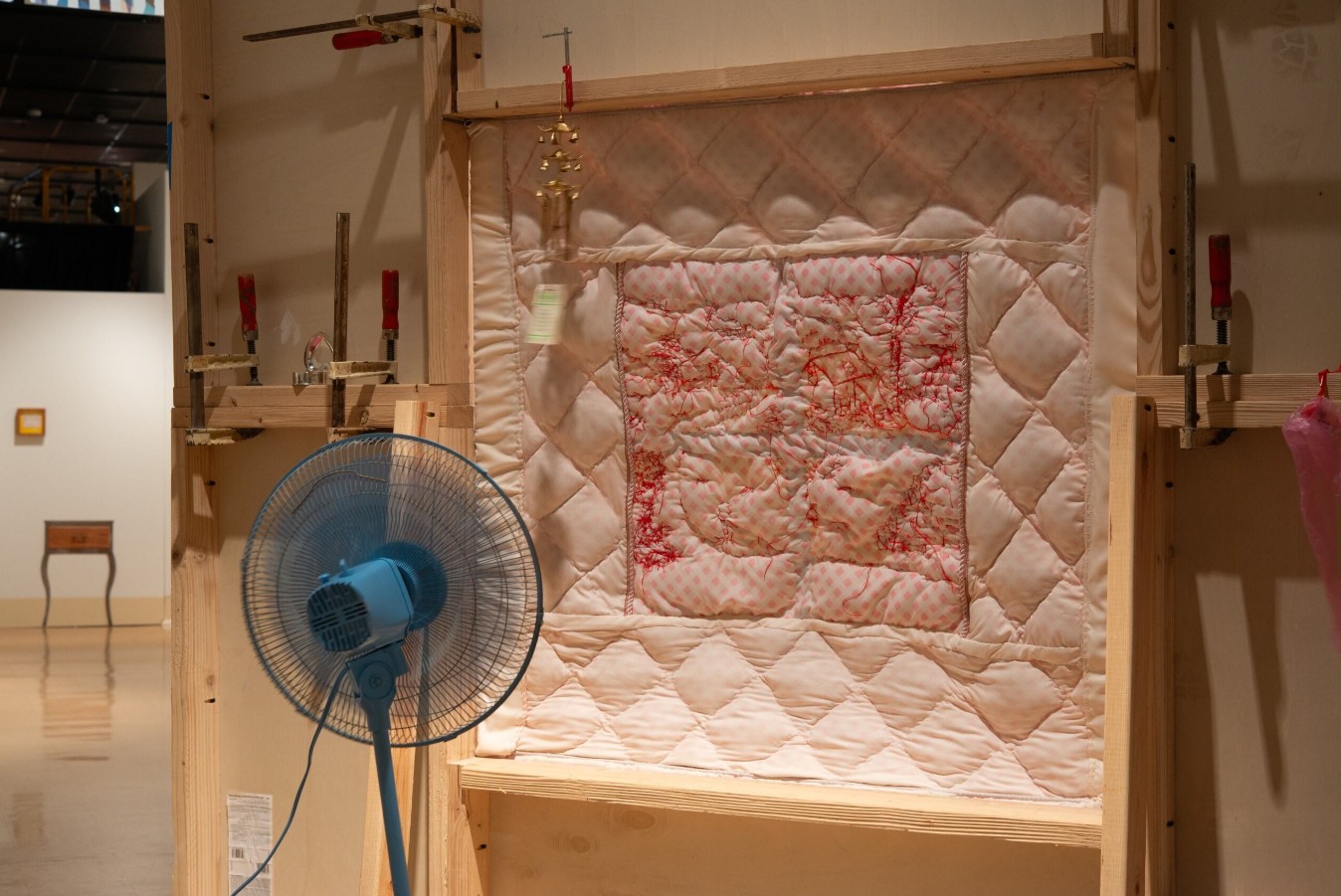
For those of us who, too, have had to carve our own homes from hollowed remains of unimaginative landscapes, Brabham offers to hold and be held by us as we witness their process of world-building—a forging and affirmation of one’s existence beneath, within, through, and beyond that which disallows it. He finds subversive ways to persist within the familiar—at the back of a drawer, stretched beyond its expected depth (Junk Drawer); in the empty space behind a superficial image of Southern domestic life (a breeze or a breath); between gaps and exclusions in the protection promised by family and religion (Hedge of Protection).
Simultaneously, his work is a smug retort in the face of convention.. The work is a prayer which says, if your home does not allow for me, then I will make my own under the floorboards; I will seep from the cracks and crevices into the structure until its weakened integrity forces its collapse. It is a primal yearning for a place to belong that is, at the same time, unwilling to settle for one that is conditional. It is unwilling to sacrifice, sanitize, flatten, or purge oneself in order to be held. The work will remind you that there has been room for me, that I have been here all along.
Rylee’s work embodies the demand to be recognized, witnessed, known, and loved consensually. It offers an important study of how we emerge, like the broods of cicadas that lie in wait underneath our feet, from the carcasses of what tried to withhold us—of how we may formulate, from even the most violent of conditions, a place to start.
