
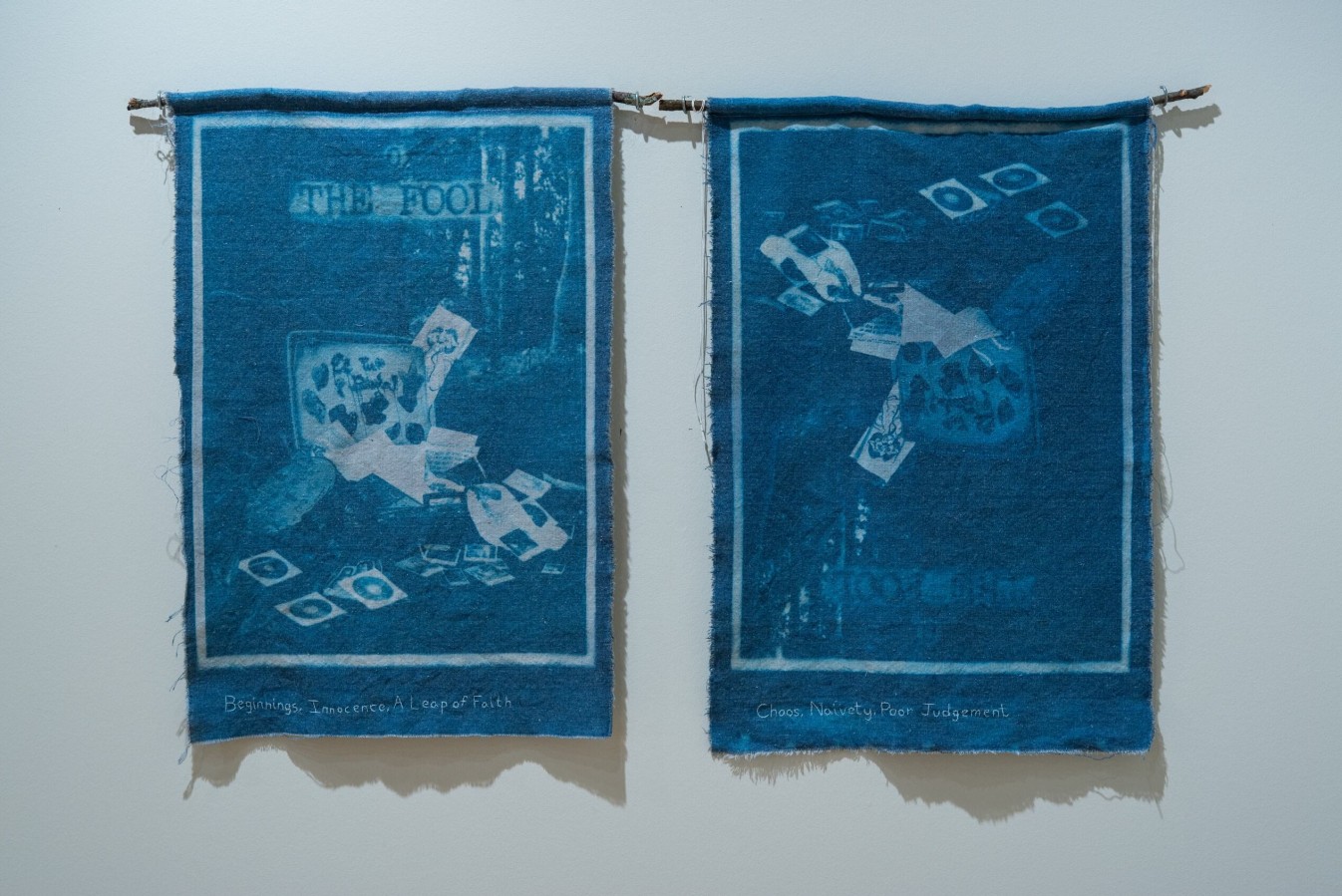
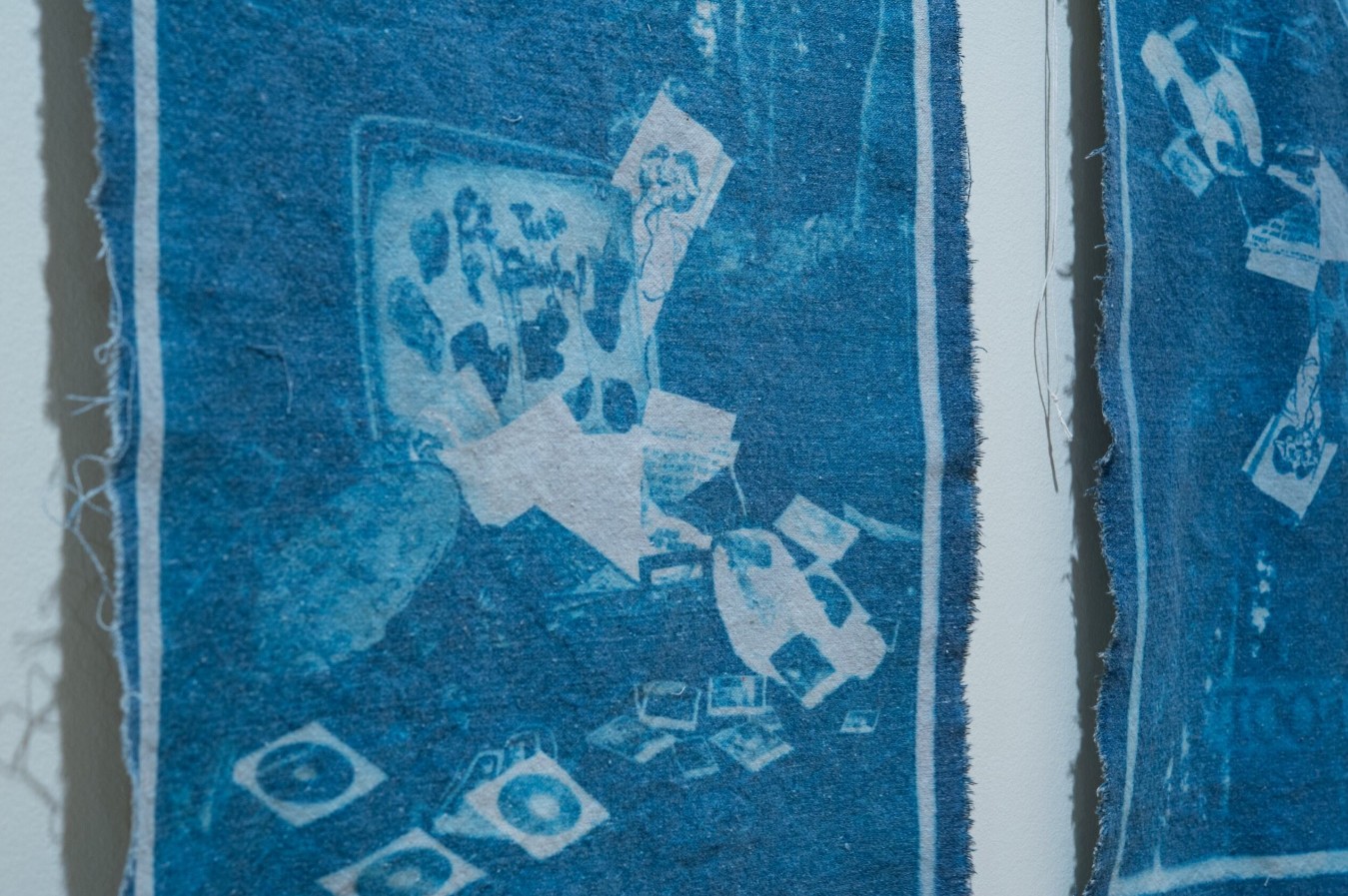
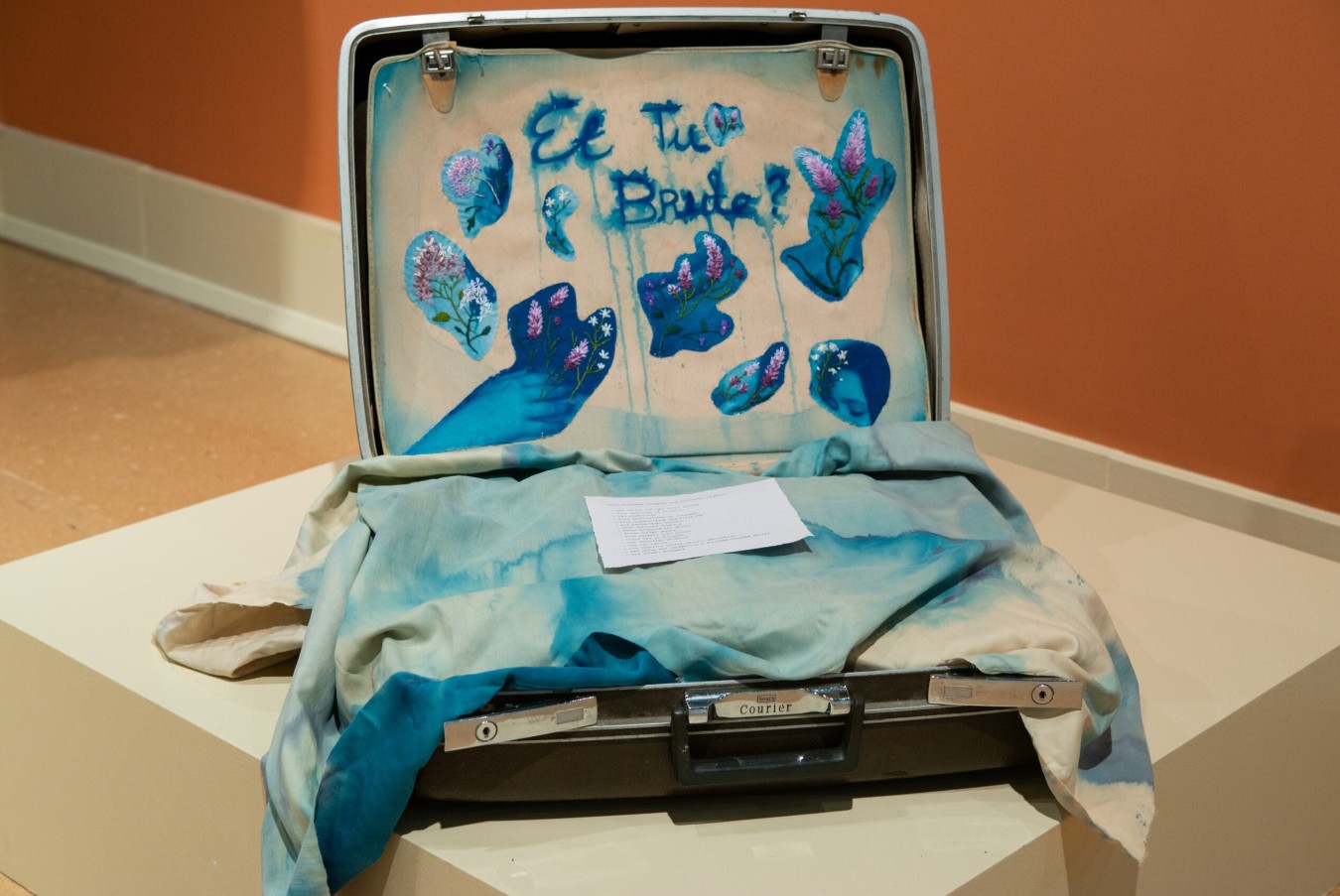
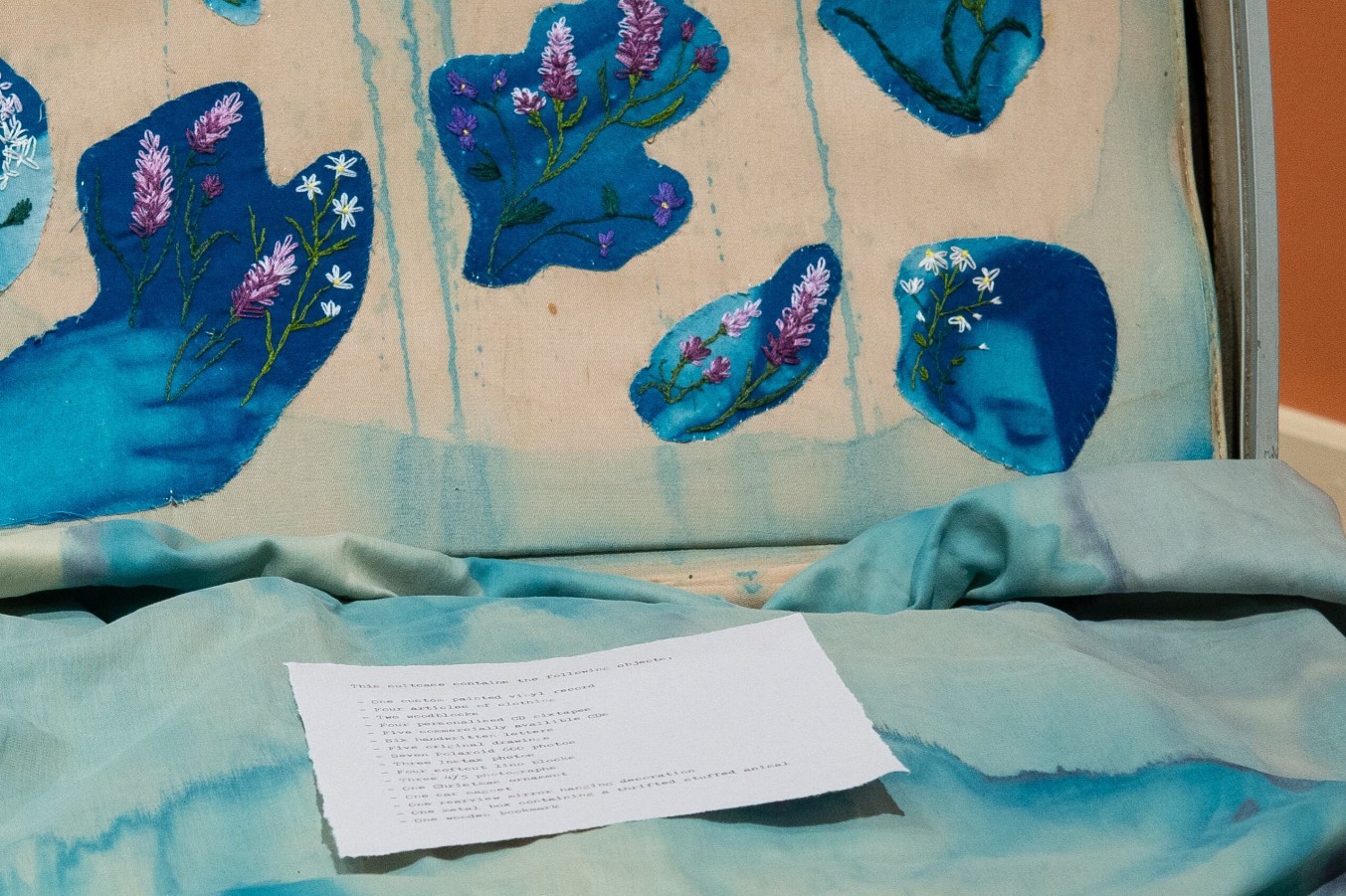
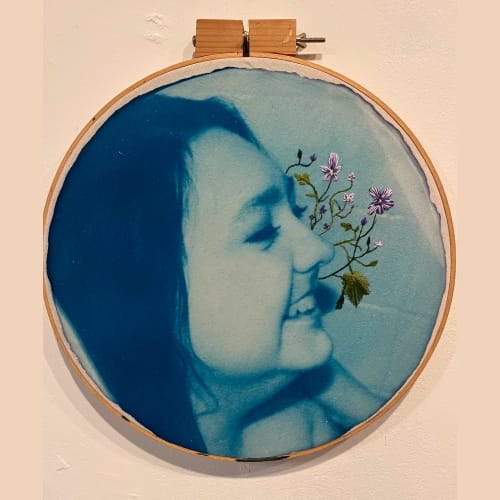
Emma Lorenz is a found-object and mixed media artist whose work combines printmaking, bookmaking, papermaking, and object fabrication to examine themes of body image and identity. Originally from Dallas, Texas, Lorenz now lives and creates in Jackson, Mississippi. In addition to her artistic practice, Lorenz teaches weekend studio classes at the Mississippi Museum of Art and works full-time at the Mississippi Museum of Natural Science. Her work has been featured in a variety of local exhibitions, including The Mash-Up: Home is Where the Art Is at the Arts Center of Mississippi in 2023. Her pieces are also included in the Ohio University printmaking archives and the Fat Print archives. Lorenz earned her BA in studio art with a minor in psychology from Millsaps College in 2024, solidifying her interdisciplinary approach to art and human experience.
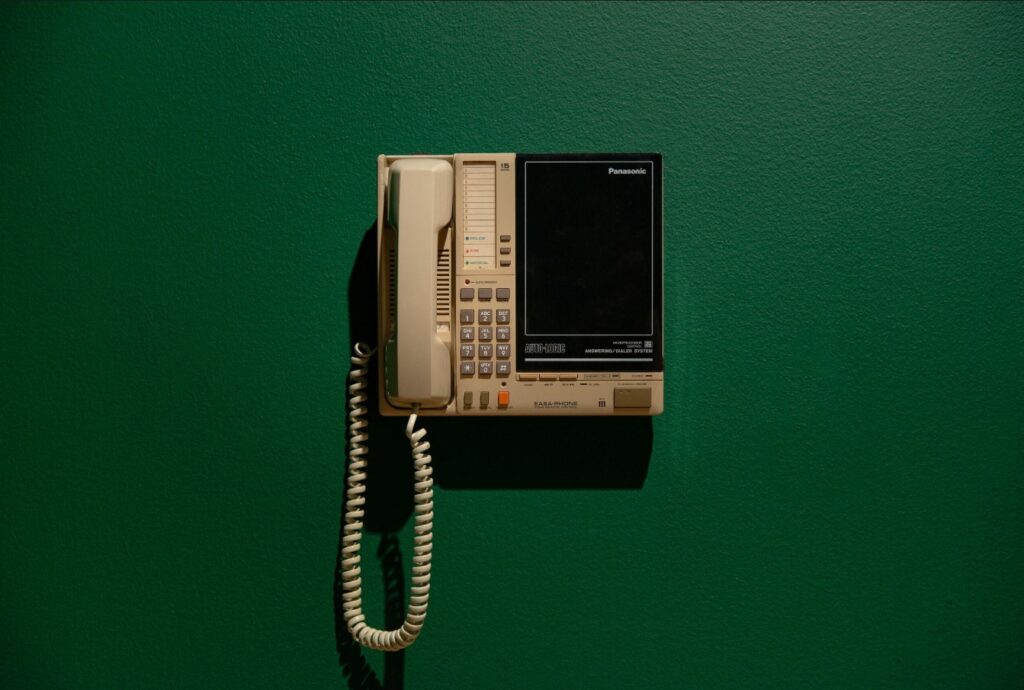
This digital catalogue includes exhibition photography as well as a collection of short texts by authors personally selected by the 2025 Invitational artists. Contributing writers were encouraged to pen texts using the style, voice, and format of their choice. The resulting suite of poetry, journalistic and critical prose, creative essays, and personal reflections offers diverse perspectives on the artists, their practices, and their lives.
A Note from the Curator
Kal Krause is a Canadian writer living and studying in Alberta. In this poem, Krause mythologizes artist Emma Lorenz’s practice, casting grief as a physical presence and companion that lives alongside her as she creates art. Grief is with Lorenz when she wakes, with her as she struggles to get out of bed, and there as she browses the shelves of thrift stores. Much of Lorenz’s multimedia practice incorporates the use of found objects, or previously used materials that are repurposed for art. In an act of radical vulnerability, she seeks to express her own experiences living with depression or experiencing heartbreak in hopes that those who experience her artwork feel seen and less alone.
Kal Krause on Emma Lorenz
Emma’s art has always felt like an attempt to process, validate, and come to terms with her own pain. She is attempting to reach out to others and find a commonality between her suffering and that of her audience. Grief, in all its forms, is present in her artworks. When she asked me to write something for Call Home, I felt stuck for weeks, unsure of how to best uplift her process and achievements. About two weeks before the deadline, Emma sent me a text late at night, asking if she could call me. She described to me how lonely she felt, how broken, in the wake of the end of a four-year relationship that had been her entire adult life up until that point. Emma carries, in my mind, a deep loneliness, and has for as long as I’ve known her.
During that phone call, our conversation shifted to her art, and I was struck by how much it all seemed to come down to a longing for connection. Emma’s art is composed of found and thrifted objects, and she explained to me that she has a fascination with the people they once belonged to. How did they end up with it, and why does it no longer serve that purpose? I found that idea to fit beautifully with how she described her art to me—as an attempt to connect with her viewers and find “a universality of grief.” By using found objects, I believe that not only does Emma draw on her own emotions to connect with her audience, but also that the countless owners of those objects become her co-collaborators. I wrote this poem two days later to capture how I understand Emma’s artistic process, and how art can harness grief and transform that loneliness into an unspoken connection between herself and the world.
Grief sits heavy on your chest,
Pinning you against your bed,
Her hands wrap around your throat.
The two of you are not strangers,
She has followed you
For much of your life.
You are not unique in this.
You know you are not unique in this.
And yet
Her presence makes you feel
Alone.
With great effort,
You pry her off,
finger by finger,
Until you can breathe again.
Silently, she pulls away,
Watching you.
How long is it before you get up?
How long before you can stop crying?
Regardless, you stand
She follows you as you head out,
Sits in the passenger seat of your car
Where he did
Not long ago.
You take yourself to the thrift store.
She wanders aimlessly between the shelves,
Leaving you a moment to breathe.
Your hands gloss over the patina of a million discarded trinkets,
Worn down by people you will never meet.
They reach out to you—
Simply ghosts of ghosts,
Imagined memories,
But you take comfort in their presence regardless.
Grief stands in your studio,
Hesitantly turning over in her hands
Your most recent find.
The two of you are not strangers,
This uneasy partnership,
Forged over years,
Has yielded the very best of your work.
For hours she stands over your shoulder,
Her hands covering yours,
And you do not push her away.
She guides you,
Slowly,
With unspoken directions,
Until you are both satisfied.
Until you both feel less
Alone.
