
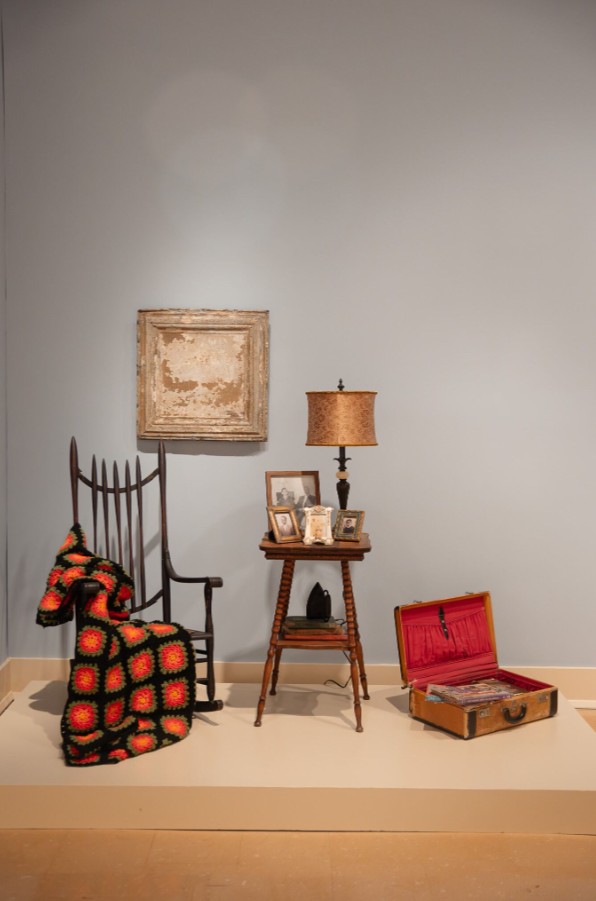


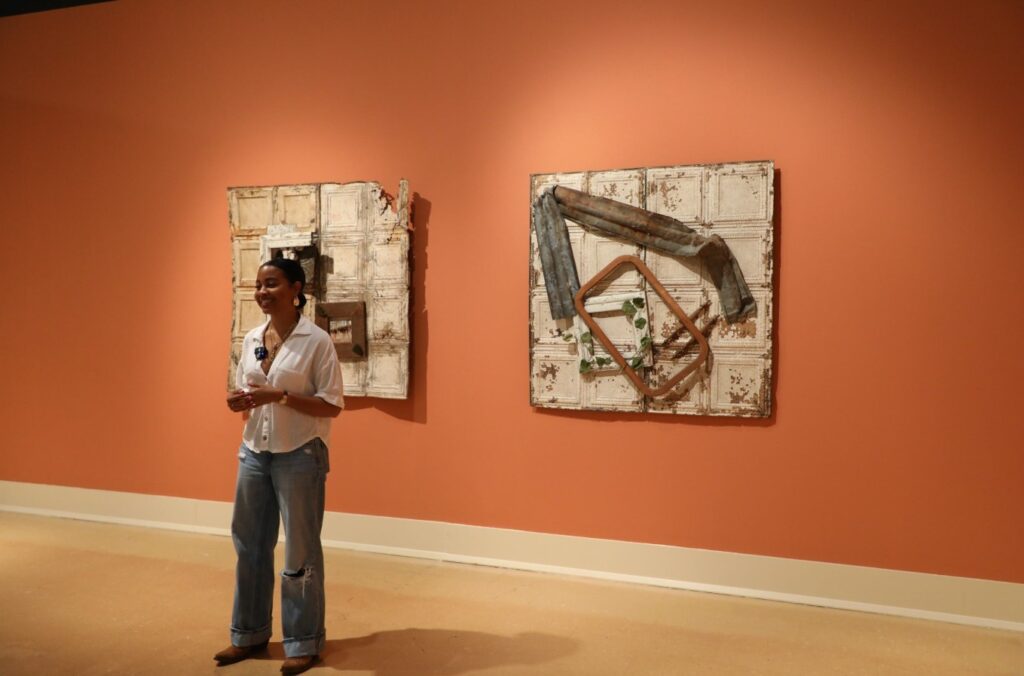
Christina McField is a community advocate, contemporary artist, and cultural producer dedicated to empowering creatives through art and education. As founder of The WoodGrain Studio, LLC, she cultivates spaces where art and culture can thrive, fostering growth and collaboration within the creative community. McField was a recipient of the 2024–2025 Mississippi Art Commission Artist Fellowship and the 2021–2022 Community Impact Artist-in-Residence at Sipp Culture. At the Mississippi Museum of Art, she contributed to deepening the institution’s engagement with the community. McField earned a BFA in sculpture from Mississippi State University and an MFA from the School of the Art Institute of Chicago. Her artistic practice explores themes of memory, history, and often-overlooked narratives of the rural South through photography and sculpture. Deeply committed to preserving Southern cultural heritage, McField advocates for fellow artists and believes in the transformative power of art to bridge communities, honor the past, and inspire future generations.
Contributing writers were encouraged to pen texts using the style, voice, and format of their choice. The resulting suite of poetry, journalistic and critical prose, creative essays, and personal reflections offers diverse perspectives on the artists, their practices, and their lives.
A Note from the Curator
Taking a historical approach, writer, creative educator, and multidisciplinary storyteller Earsley Quinn provides the necessary context for deeper understanding of the practice of multidisciplinary artist Christina McField. McField works across media, photography, sculpture, and installation, incorporating found materials and inherited objects that speak to her own nostalgic explorations of Mississippi. Reaching back through references to historical documents and passed along stories, Quinn places McField into a genealogy of placemaking and investment in the potentials of Mississippi as a place they’ve long called home.
Earsley Quinn on Christina McField
“When the Dust Settles”
The odds of being struck by lightning in any given year are less than one in a million—but that is how John Edward Johnson made his grand exit from this realm. An “aged and well-known farmer,” according to his local newspaper, Johnson passed on in 1942. He was the father of Mattie Hazeltine Johnson Jones, who took the Jones name from her marriage to Walter Jones, son of Isiah Jones of the Coffadeliah community in Neshoba County, Mississippi. Isiah Jones was described by a newspaper at the time of his death in 1923 as “an excellent negro, one of the county’s best: honest, reliable, truthful, and respected—through hard work he acquired considerable property.” I don’t know the exact probability of a Black man during Jim Crow–era Mississippi securing excellence without depredation, but I’d hypothesize that the odds were slim.
Walter and Mattie owned and operated a working farm in the Brandon Hill community of Neshoba County. They produced goods including cotton, cattle, fruits and vegetables, and the famous Vardaman sweet potatoes cultivated by Isiah Jones, who was named after a Mississippi town where they are still grown. Isiah’s sweet potatoes were so renowned that visitors from Tuskegee, Alabama, came to investigate the sorcery that produced them. Walter and Mattie’s pond also achieved widespread recognition as people came from miles around to fish. These stories feel anomalous, like catching lightning in a bottle, inhabiting a sort of mysticism typically found in folklore. Despite their tall-tale connotations, they are rooted in reality, representing an ancestral lineage that culminated in Christina McField.
Prior to formal records, the timekeeper of African American family trees was none other than the Holy Bible. Dates of birth, names, and deaths—all were typically transcribed on a thin sheet of paper as fragile as porcelain. The text of the Bible also provides insight into the significance of these names. For example, Job 14:14 begs the question: “If a man dies, shall he live again?” Perhaps a clue lies a few chapters back, in Job 8:8: “Inquire now of former generations and consider what their ancestors discovered. For we were born only yesterday and know nothing, since our days on earth are a shadow.”
As Christina conceptualizes her art, she will remark, “I don’t know what I’m trying to say yet,” or “I’m not sure what this means, I just felt drawn to it,” which exemplifies her ability to let herself be a vessel who requires no justification or explanation for entry and existence. After all, the epiphanies that flow through her aren’t strangers. They feel familiar, or familial. Akin to a sail in the wind, Christina allows her DNA to propel her art forward. Following her inner compass, she sets her sights on visual artifacts of memory. As she depicts objects suspended in time, she resuscitates the stories intrinsically tied to them. Christina’s art practice explores the aftermath and meaning of home, provoking contemplation of what happens when the dust settles. Genesis declares, “for dust you are and to dust you will return.” What might emerge from the shadows and take form out of the sediment?
