

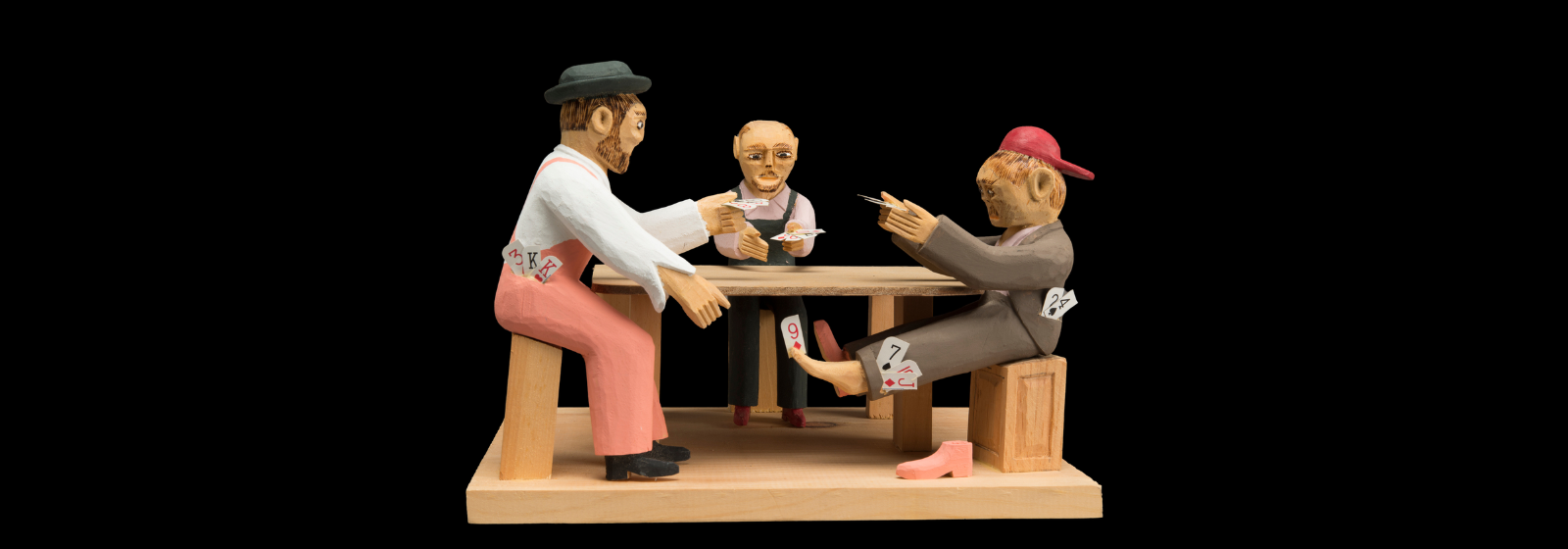

“Folk art” is a term applied to artwork produced by self-taught artists working outside of formal art institutions. These artists often draw on regional traditions, personal experience, and deeply individual visions.
Folk artists often use readily available materials such as cardboard, wood, wire, and locally sourced clay. Some, however, employ more unconventional materials. For example, Mississippi-born artist Hubert Walters (b. 1931) used automotive filler to make the bust on display here.
Other hallmarks of folk art are its rich sense of humor, local cultural references, and mysticism. Artist and baptist minister, Howard Finster, explained that he turned to artmaking after receiving a divine vision, later building an entire chapel in his yard.
Many folk artists have working-class backgrounds and come to art-making later in life. Mose Tolliver (1925–2006), for instance, turned to painting after a severe workplace accident left him unable to continue physical labor.
The American South has played a central role in the development of American folk art. Many artists from the region have received global recognition, with works represented in collections at the Smithsonian Institution, the Metropolitan Museum of Art, and other major institutions. Mississippi Museum of Art’s permanent collection features unique works by folk artists from across the American South.
