

The Donna and Jim Barksdale Galleries for Changing Exhibitions
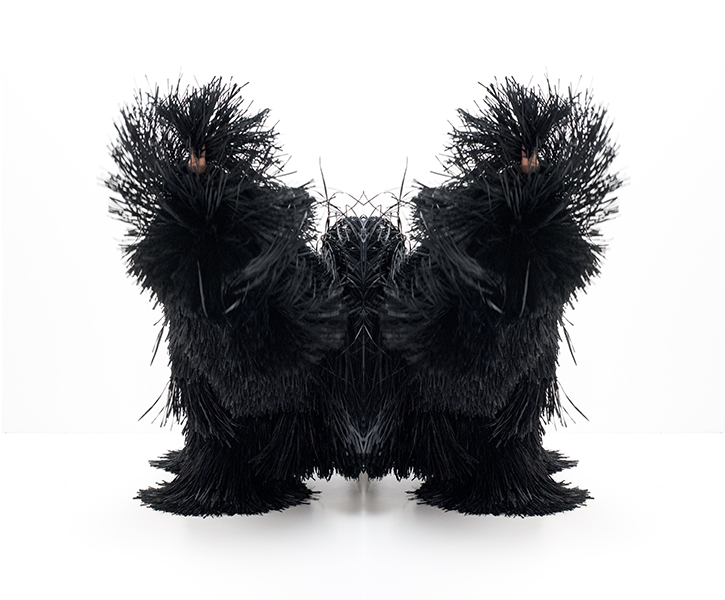
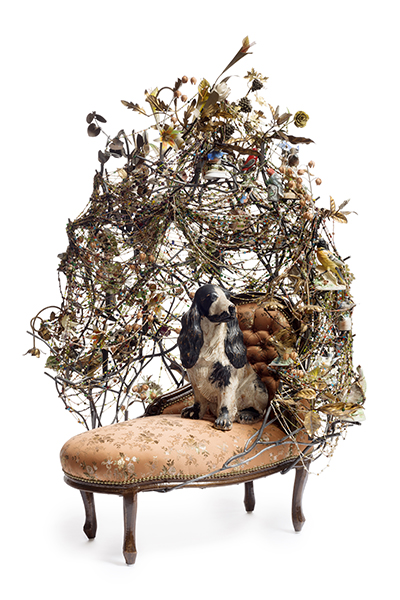
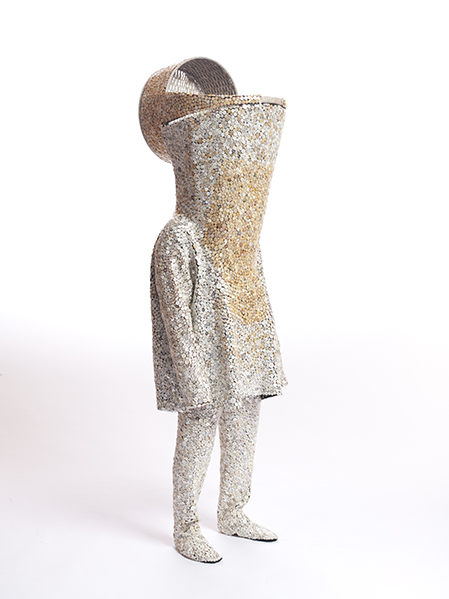
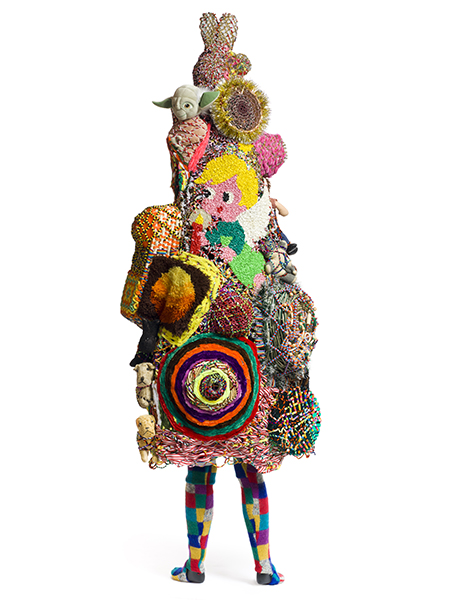
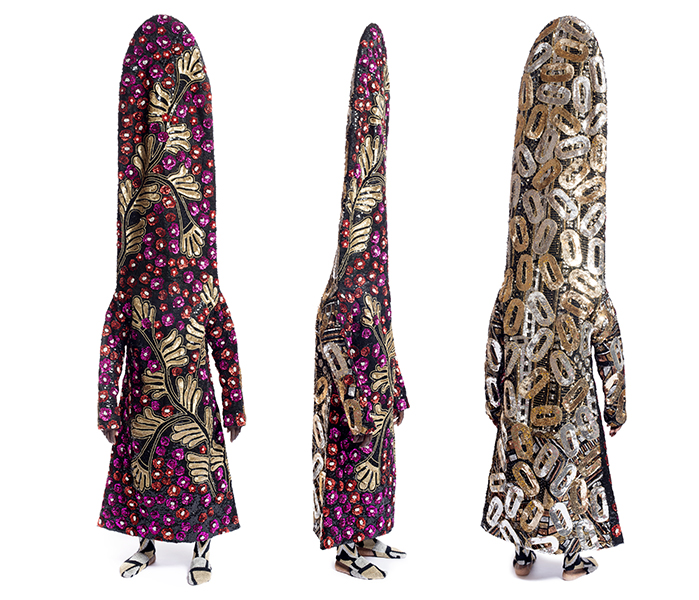
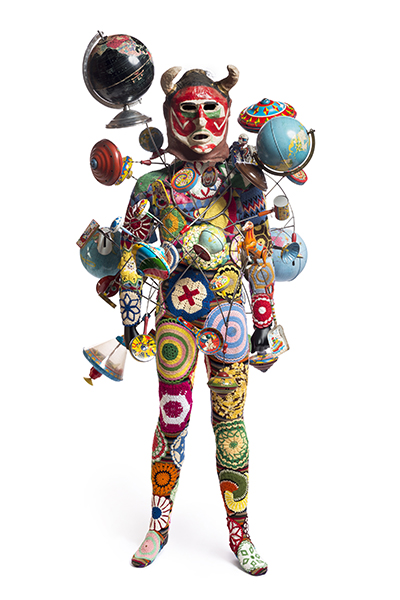
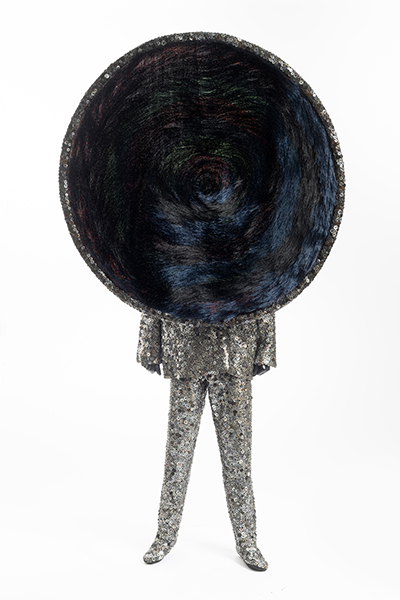
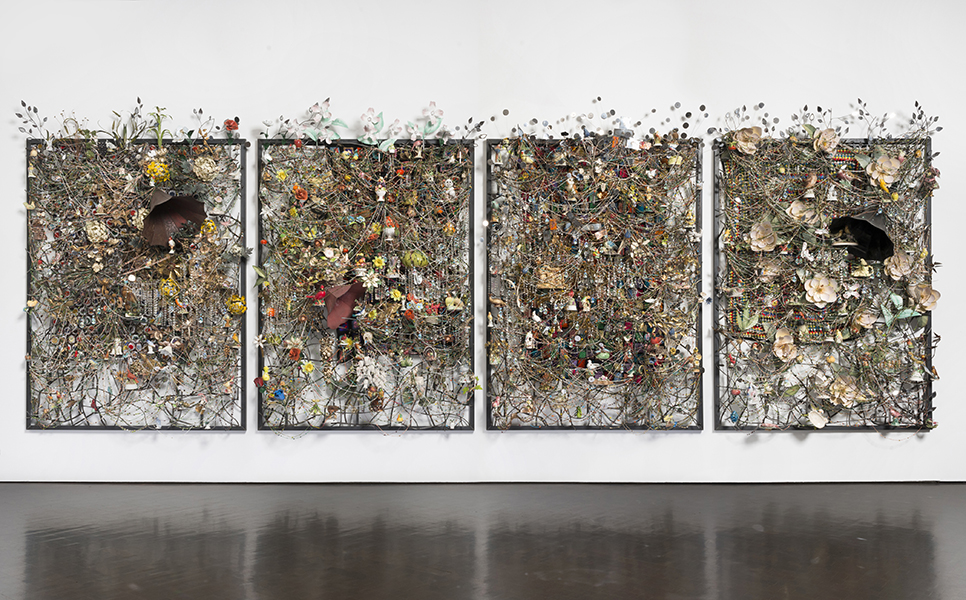
Chicago-based artist Nick Cave (b. 1959) produces work in a wide range of mediums, including sculpture, installation, video, and performance. His creations, bursting with color and texture, are optical delights that can be enjoyed by audiences of all ages and backgrounds. A deeper look reveals that they speak to issues surrounding identity and social justice, specifically race, gun violence, and civic responsibility. His trademark human-shaped sculptures—called soundsuits because of the noise made when they move—began as a response to the beating of Rodney King by policemen in Los Angeles more than 25 years ago. As an African American man, Cave felt particularly vulnerable after the incident, so he formed a type of armor that protected him from profiling by concealing race, gender, and class.
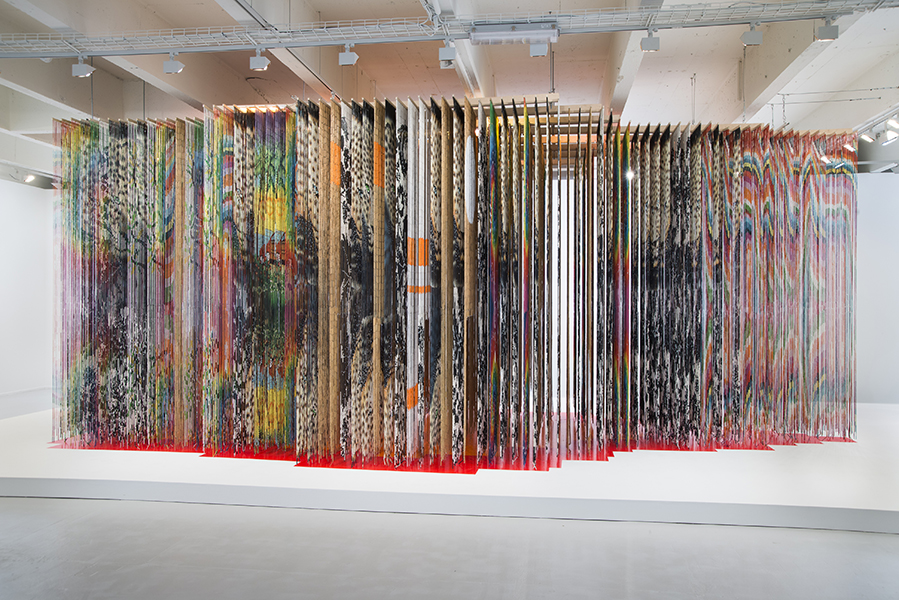
Along with broadcasting an increasingly urgent call for equity, Cave wants his art to spark viewers’ imaginations and aspirations. This exhibition’s title, Feat., refers to the exceedingly hard work that goes into attaining success (it takes, for example, roughly seven hours to hand-sew just one square foot of a button soundsuit). It also plays on how talent is often listed iwn promotional materials. Through this immersive installation, Cave hopes to provide a transformative place where your narrative can be featured, and your dreams can soar.
This exhibition was organized by the Frist Art Museum in Nashville, Tennessee, with support from the National Endowment for the Arts.
The presentation of this exhibition in Jackson, Mississippi, is sponsored by the Ford Foundation.
An unorthodox exhibition “catalogue” accompanies the exhibition. It is a large tapestry or spreadsheet of sorts, made of a durable, weather-resistant material that, unfurled, can potentially serve an array of functions—wall art, a picnic blanket, a tablecloth—depending on the user’s imagination and preference. In the spirit of Cave’s sculptural work and public performances, it also offers the viewpoints of multiple perspectives from a cross-section of disciplines. Collaborators on past projects, including choreographer Bill T. Jones, and current Nashville creatives, both established and emerging, were invited to reflect on aspects of Cave’s practice, such as justice and transformation.
