

Forward, by 2020 in-state artist in residence Charles Edward Williams, is a seven-track audio album with interviews and original music and is the result of an interactive community engagement project that considered race relations in the early 1900s.
The album’s title, Forward, was inspired by the 1961 song We’ll Never Turn Back by Bertha Gober, an activist with the Student Nonviolent Coordinating Committee (SNCC). The song specifically relates to incidents in Pike and Liberty counties during the early 1960s and throughout the 20th century. SNCC considered the song its anthem and, in 1963, the organization developed a film of the same title to record the struggle for equality.
The artist asked a series of questions of the city’s community leaders, residents, and students. Williams recorded their experiences and their aspirations. These recordings, led by Calvin Phelps, an artist, and Director for the Pike School of Art, are the foundation of Forward. The process also included recording sounds and music to allow listeners to imagine themselves in McComb in an immersive way. Williams collaborated with musicians at Vigor Music, a recording studio in McComb, over numerous tele-sessions to layer the sounds and audio material for the completed tracks.
Forward listeners arrive in McComb on a train at the end of 2020 as Pastor Partman, pastor of Community of Believers, sets the stage of a tumultuous yet hopeful time. From a small railroad town in 1969, McComb has seen many changes. Its citizens continue to acknowledge the city’s history, but they don’t live in the past. For them, the important thing is to acknowledge the town’s uncomfortable past and to make enlightened changes within themselves. Throughout McComb’s troubled history, its citizens have tried to stay together, hopeful, and move forward.
Forward
Featuring: Pastor Partman / Community of Believers Cultural Fellowship
Featuring: Calvin Phelps (conductor), Susan Dowdy (community member), Janice England (community member)
Featuring: Calvin Phelps (conductor), Susan Dowdy (community member)
Featuring: Porta P (vocalist), Elder John Johnson / Community of Believers Cultural Fellowship
Featuring: Susan Dowdy (community member)
Featuring: Tony McGhee (community member), Antonio “Tony T” (music), Timothy Varnado (drummer)
Featuring: Charles Edward Williams (artist), Gerald MaGee (guitarist), Antonio “Tony T” (music)
Featuring: Pastor Partman / Community of Believers Cultural Fellowship
Watch the full playlist here.
Letter from Charles
There was a moment in the beginning where I looked straight into the eyes of the past and the soul of a community. It was uncomfortable from where I stood; in the midst of an unfamiliar, yet familiar place, drawing nearer to the spirits of McComb, Mississippi. You could hear their footsteps draping the landscape in McComb and their sonic melodies sung hour by hour, minute by minute, second by second, as time stood still. You could feel the spirits speaking to your soul, inviting you sit, observe, listen more, and stay for a while. There was an undeniable tender presence where the focus of self was lost, and the warm abundance of calm embrace comforted my senses.
Time in McComb answered many questions I wanted to ask as I gathered information from McComb’s past and rich history. The questions spoke to my very own existence as I drove, walked, and witnessed McComb. Being in McComb, I could feel its complexities but was surrounded by the strong coverage of long lineage paved of resilience and discovery. I felt shared values of hope, like back home, and the tender care of the lives connected to one another in the community for those who lived and those passing through.
Prior to my visit, COVID-19 halted the project and challenged my process for interacting with the community. Once successfully re-strategized and completed, it opened up a new opportunity for me to see and experience McComb, with a different lens. As I stood staring at the train that interrupted the calm of my stillness, it symbolically whispered to me the answers, personally and professionally.
Reflecting on the creation of the project, each song portrayed was a part of home, your home, and a part of history. I am forever grateful to have had the opportunity to work with those who participated and trusted me to carry out a sound vision for more inclusion, connectedness, and unity.
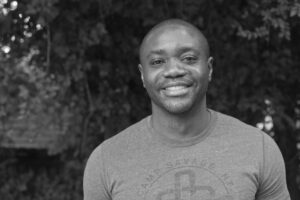
Charles Edward Williams
